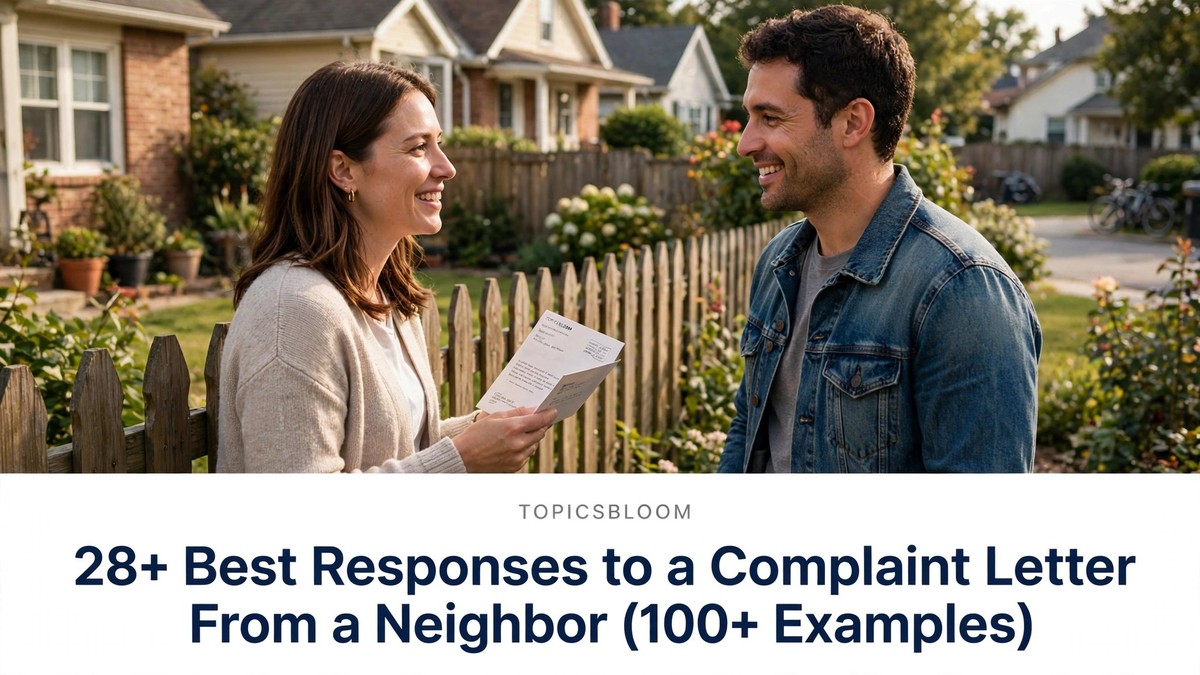
28+ Best Responses to a Complaint Letter From a Neighbor (100+ Examples)
Quick guide
Good responses to a complaint letter from a neighbor can keep a small problem small, and a careless reply can turn it into a long dispute that neither side wants. A neighbor complaint letter usually arrives because someone feels unheard, whether the issue is noise, parking, a fence, a pet, or rubbish, so the way you answer in writing sets the tone for everything that follows.
Below you will find 24 copy-ready responses to a complaint letter from a neighbor, sorted by the situation you face most often: polite openings, noise complaints, parking and boundary problems, replies when you disagree, offers to fix the problem, and short replies for email, text, and a quick note. If the complaint is about a business matter rather than a neighbor, our guide to responses to a customer complaint about a product has matching wording for that conversation.
Why your response to a complaint letter from a neighbor matters
A calm written reply to a neighbor complaint letter shows that you read the letter, took it seriously, and want to solve the problem, not win an argument. Neighbors live close together for years, so one thoughtful letter can protect the relationship, while a defensive or silent reply can push the matter toward a landlord, a council, or a solicitor. Good complaint letters share the same structure, and you can see it in these sample replies to a complaint letter: acknowledge the concern, explain briefly, state the fix, and close with goodwill.
- It keeps the peace on your street. A polite reply tells your neighbor that you are reasonable and approachable, so future problems get a knock on the door instead of another formal letter.
- It creates a clear written record. When your reply states what happened and what you will do, both sides have the same facts to refer back to if the issue comes up again.
- It stops the problem from growing. A fast, specific answer with a date for the fix gives your neighbor a reason to wait, instead of escalating the complaint to someone else.
Best responses to a complaint letter from a neighbor
Pick the group that matches your situation, then copy the reply that fits your tone. Change the names, dates, and details to fit the real letter, keep the tone polite and steady, and always name the next step and when it will happen. If you want a reply shaped for your exact letter, try the free Smart Reply Generator and paste in the neighbor’s words. For wording when a complaint arrives about an employee, see our responses to a complaint letter from an employee guide as well.
1. Warm and polite opening replies
Use these replies to open your letter when you want to thank your neighbor for writing, show that you took the complaint seriously, and set a calm tone for the rest of your answer. A warm opening should name the issue in one line, say you are sorry for the trouble, and promise a clear next step, so your neighbor keeps reading instead of preparing a second letter.
#1 “Thank you for your letter, and for taking the time to tell me about the problem instead of letting it build up. I am sorry for the trouble this has caused you, and I have read your letter carefully. I would like to put this right, and I will explain below what I plan to do and when I will do it.”
#2 “Thank you for writing to me about this, and please accept my apology for the inconvenience. I understand how frustrating this must have been, especially if it has gone on for some time. I value being a good neighbor, and I want us to sort this out in a friendly way.”
#3 “I received your letter yesterday, and I am grateful that you raised the matter directly with me. I am sorry for any disturbance, and I take your concerns seriously. Please let me explain what happened from my side, and what I will change so it does not happen again.”
#4 “Thank you for letting me know about the problem, and I am sorry you felt you had to write a formal letter. I would much rather hear about these things early, so please think of this reply as the start of a proper conversation. I have set out my response below, and I am happy to talk it through in person too.”
2. Replies for a noise complaint
Use these replies when your neighbor complains about noise, such as loud music, late parties, building work, or a barking dog. Apologise for the disturbance, explain the cause in one or two lines, and state the exact change you will make, with a time, so your neighbor can see the problem is being taken seriously.
#5 “Thank you for your letter about the noise, and I am very sorry it disturbed your evenings. The music on Saturday came from a birthday party that ran later than I planned, and I should have warned you in advance. From now on I will keep music indoors after nine in the evening, and I will let you know before any future gathering.”
#6 “I am sorry about the noise from the building work, and I understand how disruptive it must be during the day. The work is due to finish by the end of next week, and the builders will only work between eight in the morning and five in the afternoon. If the noise is still a problem after that date, please tell me straight away.”
#7 “Thank you for writing about the noise from my dog, and I apologise for the barking early in the morning. I have spoken to a trainer, and we have started a plan to keep him calm when I leave the house. I will check on his progress every week, and I hope you notice a real difference within a month.”
#8 “I am sorry the noise from my flat has been a problem, and I did not realise how clearly sound travels through the walls. I have put down thick rugs, I will wear soft shoes indoors, and I will keep the television at a lower volume after ten at night. Please let me know if it still bothers you.”
3. Replies for parking and boundary complaints
Use these replies when the complaint is about parking, a fence, a hedge, bins, or a shared boundary. These problems are often about unclear lines and small habits, so acknowledge the point, explain what you will change, and agree on a simple rule that both sides can follow from now on. For wording when a patient writes a similar letter about care, see our responses to a complaint letter from a patient guide.
#9 “Thank you for your letter about the parking, and I am sorry my car has been blocking part of your drive. I did not realise how tight the space had become, and I understand why that would be frustrating. From today I will park fully inside my own space, and I will ask visitors to use the street instead.”
#10 “I am sorry about the overgrown hedge, and you are right that it has grown too far over the boundary. I have booked a gardener for this weekend, and the hedge will be cut back to the boundary line. After that I will trim it every two months so it does not become a problem again.”
#11 “Thank you for writing about the fence, and I understand why the damage has been a concern. I have checked the boundary, and I am happy to share the cost of the repair, since the fence sits between our two gardens. I will get two quotes this week and share them with you before any work starts.”
#12 “I apologise for leaving my bins out on the wrong day, and I understand how untidy that looks for the whole street. I have put a reminder on my calendar for collection day, and I will bring the bins in on the same evening. If I ever forget, please feel free to remind me.”
4. Replies when you disagree with the complaint
Use these replies when you believe the complaint is mistaken, exaggerated, or about something you did not do. Stay polite, thank your neighbor for writing, explain your side calmly with facts, and offer a fair way to check the truth together, such as a quick talk, a look at the area, or a neutral third person.
#13 “Thank you for your letter, and I appreciate you raising this with me directly. I have checked the dates you mentioned, and I was away that weekend, so I do not think the noise came from my house. I am happy to talk this through with you, and I will help you work out where it did come from.”
#14 “Thank you for writing, and I understand why you are unhappy, but I would like to explain my side before we decide what to do next. The parking space you mention is part of my property, and I have checked the deeds to confirm this. I am glad to show you the plan, and I hope we can agree on the facts together.”
#15 “I am sorry you have had trouble, and I take your letter seriously, but the dog barking you describe does not match my dog, who is with me at work during the day. There is another dog two doors down, and it may be worth checking there too. I am happy to help you find the real source.”
#16 “Thank you for your letter, and I can see this has been upsetting for you. I do not agree with every point in the letter, but I do agree that we should talk about it calmly. Would you be free for a cup of tea on Saturday, so we can go through it point by point and find a fair answer?”
5. Replies offering a fix and a follow up
Use these replies when you want to offer a clear solution, a date, and a follow up, so your neighbor knows the matter will not be forgotten. Name the action, say when it will happen, say how you will check it worked, and invite your neighbor to tell you if the problem returns.
#17 “Thank you for your letter, and I am sorry again for the trouble. I will fit a draft excluder and door seals this week to cut the noise from my hallway, and I will test them with a friend listening from your side. I will write to you next Monday to confirm the work is done, and I will check again with you after two weeks.”
#18 “I am grateful you wrote, and I want to make this right properly. I have spoken to my landlord about the shared drain, and a plumber is booked for Thursday morning. If the smell or the damp is still there after the visit, please tell me at once, and I will chase the landlord again the same day.”
#19 “Thank you for your patience, and I apologise for the delay in replying. I have ordered the parts to repair the gate, and they will arrive by Friday. I will fit the gate over the weekend, and I will knock on your door on Monday so you can see the repair and tell me if you are happy with it.”
#20 “I am sorry for the inconvenience, and I have set out a simple plan to fix it. I will move the compost bin to the far end of my garden this weekend, I will keep it covered, and I will clear the shared path every Sunday. Please let me know in a month whether the problem has gone, or if I need to do more.”
6. Short replies for email, text and a quick note
Use these short replies when the complaint arrives by email or text, or when you want to answer quickly before sending a full letter. Keep the tone warm, name the action in one line, give a clear next step, and promise a fuller reply or a chat in person, so a short message still feels complete.
#21 “Hi, thank you for your letter, and I am sorry for the trouble. I have read it carefully, and I will write back properly by Friday with what I plan to do. Please feel free to knock on my door before then if you would like to talk.”
#22 “Thank you for letting me know, and I apologise for the disturbance. I will keep the noise down after nine from tonight, and I will check with you next week to see if it has improved.”
#23 “Hi, I am sorry about the parking, and you are right to raise it. I will move my car today, and I will make sure visitors do not block your drive again.”
#24 “Thank you for your message, and I am sorry for the problem. I have booked someone to fix it on Thursday, and I will let you know as soon as the work is done.”
What to avoid when responding to a complaint letter from a neighbor
| Avoid this | Try this instead |
|---|---|
| Ignoring the letter and hoping it goes away | Reply within a few days, thank your neighbor for writing, and state what you will do next |
| Blaming your neighbor or calling them unreasonable | Thank them for raising the issue, then explain your side calmly with facts |
| Apologising with no plan and no date | Name the action, give a date, and follow up to confirm the fix worked |
| Making promises you cannot keep | Offer only what you can do, and say clearly if a fix needs more time |
| Discussing the dispute with other neighbors | Keep the conversation between you and your neighbor until it is resolved |
Frequently Asked Questions
How quickly should I reply to a complaint letter from a neighbor?
Reply within a few days. A prompt reply shows respect, stops the problem from growing, and keeps the door open for a friendly talk.
Should I apologise if I think the complaint is wrong?
Yes, apologise for the trouble. You can be sorry they were disturbed while still explaining your side calmly and with facts.
What should I include in my reply letter?
Thanks, facts, fix, and follow up. Thank them, explain briefly, name the action and date, and say when you will check back.
Final Thoughts
Good responses to a complaint letter from a neighbor are simple at heart: thank your neighbor for writing, apologise for the trouble, explain your side briefly, name the fix and the date, and follow up to confirm it worked. Keep the tone polite and steady, even when you disagree, and treat every letter as a chance to protect a relationship that will last for years. Do that every time, and most neighbor complaints will end with a handshake, not a second letter.
Leave a Reply