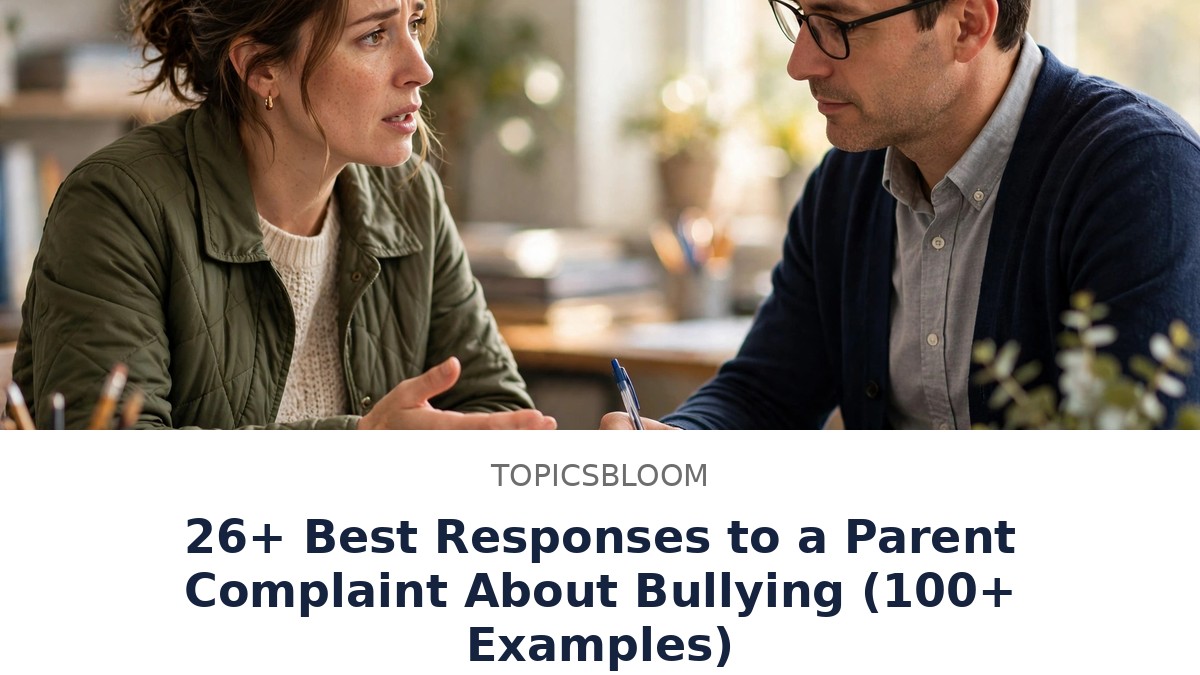
26+ Best Responses to a Parent Complaint About Bullying (100+ Examples)
Quick guide
A parent complaint about bullying is one of the hardest messages a teacher, principal, or school office can receive, and the reply you send decides whether the family feels heard and the child feels safe again. Bullying means repeated behaviour that hurts, frightens, or isolates a child, and it can happen in class, in the playground, on the school bus, or online after school, so a reply that is calm, fast, and specific is the best first step you can take.
Below you will find 24 copy-ready responses to a parent complaint about bullying, sorted by the situation you face most often: warm replies that thank the parent for speaking up, replies that promise a careful investigation, replies that share your safety plan, replies for a meeting with the family, replies that follow up after you act, and short replies for email and chat. If the complaint is about a general service problem rather than bullying, our guide to responses to a customer complaint has matching wording for that conversation.
Why your response to a parent complaint about bullying matters
A strong reply to a parent complaint about bullying matters, because the parent is frightened for their child, and your first words tell them whether the school will act or look away. A complaint about bullying is also a safety issue, not a customer service issue, so a reply that names the next step and a date for an update is far more useful than a vague promise. Good replies share the same structure, and you can see it in this guide to responding to a parent complaint about bullying, with calm replies and practical steps for teachers and school leaders: listen first, thank the parent, gather the facts, act, and follow up in writing.
- It keeps the child safe. A fast reply starts the investigation quickly, and quick action can stop the behaviour before it happens again at break time or on the way home.
- It builds trust with the family. Parents who feel heard are far more likely to work with the school, and a clear plan with dates shows that you take their worry seriously.
- It protects the school. A written reply that records what was reported, what you will check, and when you will update the parent creates a clear record if the concern is raised again.
Best responses to a parent complaint about bullying
Pick the group that matches your situation, then copy the reply that fits your tone. Change the names, dates, places, and details to fit the real child and the real incident, keep the tone calm and caring, and always name the next step and when it will happen. If you want a reply shaped for your exact message, try the free Smart Reply Generator and paste in the parent words. For wording when the complaint is about behaviour at work, see our responses to workplace bullying guide, and for a complaint about a member of staff, see our responses to a complaint about a staff member guide too.
1. Warm replies that thank the parent for speaking up
Use these replies to answer a parent complaint about bullying as soon as it arrives. Thank the parent for trusting you with the news, say clearly that you take it seriously, and promise a fast next step, so the parent knows their child will not be ignored.
#1 “Dear Mrs. Ahmed, thank you for telling me about what happened to Daniel at break time yesterday. I am sorry he went through that, and I want you to know that we take every report of bullying seriously. I have noted the details you shared, and I will speak to the staff on duty today and call you back by tomorrow afternoon with an update.”
#2 “Dear Mr. Carter, thank you for your email, and thank you for trusting us with this. I am sorry to hear that Emily has been upset at school, and I understand how worrying this must be for you. I will look into what happened this week, talk to the class teacher, and I will phone you on Thursday to share what we found and what we will do next.”
#3 “Dear Mrs. Patel, thank you for coming to see me today. I am sorry that Aisha has had such a hard time, and I appreciate you raising it so clearly and so calmly. I will record your concern in our incident log today, and I will arrange a meeting with you, the class teacher, and our pastoral lead within two school days.”
#4 “Dear Mr. Thompson, thank you for your message, and I am glad you told us straight away. No child should feel afraid at school, and we will act on this. I will check the facts with the staff involved, and I will contact you by Friday with our plan to keep Jack safe.”
2. Replies that promise a careful investigation
Use these replies when you need time to check the facts before you can give a full answer. Promise a fair investigation, name who you will speak to, and give a firm date for your update, so the parent is not left waiting and wondering.
#5 “Dear Mrs. Ahmed, thank you for the details, and I understand why you want action now. I will speak to Daniel, to the other children involved, and to the staff who were on duty, and I will do that today and tomorrow. I will call you on Friday morning to tell you what we found and what steps we are taking.”
#6 “Dear Mr. Carter, I hear your concern, and I will investigate this properly before I reply in full. I will review the incident reports from this term, speak to the lunch supervisors, and check the CCTV in the corridor where this happened. I will update you in writing by Monday, and sooner if we find something urgent.”
#7 “Dear Mrs. Patel, thank you for the dates and the examples you gave me, as they will help us a great deal. I will gather the facts from everyone involved, and I will not share names or details with other families while we do that. I will phone you within three school days with what we found and the plan we have agreed.”
#8 “Dear Mr. Thompson, I take this report seriously, and I will look into it step by step. I will speak to the class teacher first, then to the children who were there, and I will keep a written record of everything we learn. I will contact you by Wednesday with our findings and the actions we will take.”
3. Replies that share your safety plan
Use these replies when you can tell the parent what will change to keep their child safe. Name the practical steps, such as closer supervision, a safe place at break, or a named adult to go to, so the parent can see real action, not just kind words.
#9 “Dear Mrs. Ahmed, here is what we will do to keep Daniel safe. A member of staff will be near the playground gate at break time, Daniel will have a named teacher he can go to at any time, and we will check in with him every day this week. I will call you on Friday to tell you how the week has gone.”
#10 “Dear Mr. Carter, I want you to know the steps we have put in place for Emily. She will sit with her chosen friend group at lunch, a teaching assistant will supervise the corridor between lessons, and her class teacher will speak to her quietly each morning. I will update you in one week, or sooner if anything changes.”
#11 “Dear Mrs. Patel, thank you for meeting with us, and here is our plan for Aisha. We have changed the seating plan in her class, we have briefed the staff on duty, and we have agreed a safe place she can go to if she feels worried. We will review the plan with you in two weeks, and you can contact me at any time before then.”
#12 “Dear Mr. Thompson, we have acted on your report, and Jack will now have a buddy from Year 6 at break time, a teacher will watch the area where the incidents happened, and the other children involved will have a meeting with our pastoral lead this week. I will phone you on Monday to check how Jack is feeling.”
4. Replies for a meeting with the family
Use these replies to invite the parent to a meeting, or to follow up after one. Offer a time, name who will attend, and explain what the meeting will cover, so the parent arrives prepared and the conversation stays calm and focused on the child.
#13 “Dear Mrs. Ahmed, I would like to meet with you to talk about Daniel and the plan we have made. Could you come to the school office on Thursday at 10am? The class teacher and I will be there, and we will go through the steps we have taken and listen to anything else you want to share.”
#14 “Dear Mr. Carter, thank you for our meeting this morning, and I am grateful for the clear way you explained what Emily has been through. We agreed the safety plan in the meeting, and I will send you a written summary today. We will meet again in two weeks to review how things are going.”
#15 “Dear Mrs. Patel, I am writing to confirm our meeting on Monday at 3.30pm in the school office. Our pastoral lead will join us, and we will discuss the investigation so far and the support we can offer Aisha. Please bring any notes or messages you have, and we will listen carefully to everything you share.”
#16 “Dear Mr. Thompson, thank you for coming in today, and I hope the meeting helped. We agreed to keep the safety plan in place, to check in with Jack every day, and to meet again next month. If anything happens before then, please call me directly, and I will act on it the same day.”
5. Follow up replies after you act
Use these replies after you have investigated and taken action, to close the loop with the parent. Say what you found in general terms, what has changed, and when you will check again, so the parent knows the case was not forgotten after the first call.
#17 “Dear Mrs. Ahmed, I am writing with the update I promised. We spoke to the children involved, we have put the supervision plan in place, and Daniel told his teacher today that he felt safer at break. I will check in with him again next week, and I will call you on Friday with a further update.”
#18 “Dear Mr. Carter, thank you for your patience while we looked into this. We found that the incidents happened at lunch, so we have changed the seating and added a member of staff to that area. Emily has settled well this week, and I will phone you next Tuesday to review how she is doing.”
#19 “Dear Mrs. Patel, I wanted to let you know how the plan is working for Aisha. The staff have followed the steps we agreed, and her teacher reports that she is happier in class and joining in more at break. We will keep the plan in place, and I will update you again in two weeks.”
#20 “Dear Mr. Thompson, following up as promised, Jack has had a good week, and the buddy system is working well. The other children have had their meeting with our pastoral lead, and they understand the behaviour must stop. I will call you again in a fortnight, or sooner if you need me.”
6. Short replies for email and chat
Use these short replies when you need a fast answer by email or chat, or when you want to confirm a detail after the main message. Keep them warm, specific, and short, and always name the next step, so the parent knows exactly where things stand.
#21 “Dear Mrs. Ahmed, thank you for telling us. We take this seriously, and I will look into it today. I will call you tomorrow afternoon with an update and the first steps of our plan.”
#22 “Dear Mr. Carter, thank you for your message. I am sorry Emily has been upset, and I will speak to the class teacher today. I will phone you on Thursday with what we found.”
#23 “Hi Mrs. Patel, thank you for raising this. I have noted your concern, and I will start the investigation today. I will update you within three school days.”
#24 “Dear Mr. Thompson, thank you for letting us know. Jack’s safety matters to us, and I will act on this today. I will contact you by Wednesday with our plan.”
What to avoid when responding to a parent complaint about bullying
| Avoid this | Try this instead |
|---|---|
| I am sure it is just kids being kids, do not worry. | Thank you for telling me about what happened to Daniel at break time yesterday. I am sorry he went through that, and I want you to know that we take every report of bullying seriously. |
| Your child probably did something to provoke it. | I am sorry to hear that Emily has been upset at school, and I understand how worrying this must be for you. I will look into what happened this week and phone you on Thursday. |
| I cannot do anything without proof. | I will speak to Daniel, to the other children involved, and to the staff who were on duty, and I will do that today and tomorrow. I will call you on Friday morning with an update. |
| I will have a word with the other child parents. | We have acted on your report, and Jack will now have a buddy from Year 6 at break time, and a teacher will watch the area where the incidents happened. |
| Just tell your child to ignore it. | She will sit with her chosen friend group at lunch, a teaching assistant will supervise the corridor between lessons, and her class teacher will speak to her quietly each morning. |
| We will sort it out, leave it with me. | Here is what we will do to keep Daniel safe. A member of staff will be near the playground gate at break time, and Daniel will have a named teacher he can go to at any time. |
Frequently Asked Questions
How quickly should a school reply to a parent complaint about bullying?
Reply the same school day if you can, and always within 24 hours. A fast first reply shows the family that the report was received, and it should name the next step and the date of your update.
Should a school tell the parent what happened to the other child?
No, share only what concerns their own child and the safety steps you have taken. The details of any action taken with another child are private, and sharing them breaks trust with every family.
What if the parent says the bullying is still happening?
Listen again, record the new details, and review the safety plan the same day. Tell the parent what has changed, increase supervision where the incidents happen, and set a new date to check in with the child.
Final Thoughts
A good response to a parent complaint about bullying is fast, calm, and specific: thank the parent for speaking up, gather the facts fairly, put a real safety plan in place, and follow up in writing on the date you promised. Pick the replies above that fit your situation, change the names, dates, and details, and always keep a written record of what was reported and what you did. A child who feels safe at school can learn, play, and grow, so your reply is the first step in making that happen.
Leave a Reply