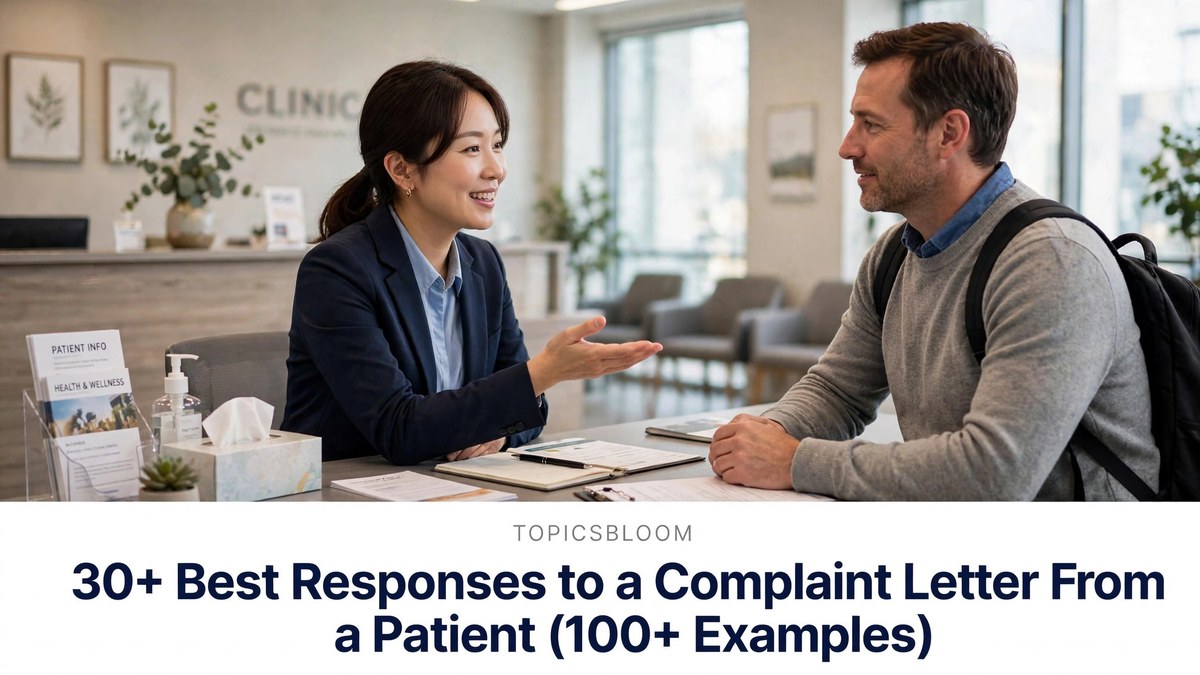
30+ Best Responses to a Complaint Letter From a Patient (100+ Examples)
Quick guide
Good responses to a complaint letter from a patient start with one simple choice: listen first, defend nothing, and answer quickly. A patient who writes a formal letter is usually worried, frustrated, or hurt, and the way your clinic, hospital, or dental practice replies will shape whether they stay, leave, or tell others about their experience.
Below you will find 24 copy-ready responses to a complaint letter from a patient, sorted by the reason for the complaint: a fast and kind first reply, long waits and appointment problems, care quality and staff behaviour, billing and charges, the investigation and the changes made, and short replies for email and phone. If you handle complaints in other settings too, our guide to responses to bad feedback will help you keep every answer calm and professional.
Why your response to a complaint letter from a patient matters
A thoughtful reply to a patient complaint shows that you took the letter seriously, and it can turn a damaged relationship into a chance to rebuild trust. Patients want to feel heard, to know what happened, and to see what will change, and a slow or defensive answer makes the original problem feel worse. The rules also set a clear timetable, since CMS-regulated facilities must answer formal grievances within seven days and California requires a written response within 30 days, so read this guide to how to respond to a patient complaint letter and reply promptly, apologise for the experience rather than for a medical outcome, and name a contact person the patient can reach.
- It rebuilds trust. A prompt, honest reply tells the patient that their experience mattered, even when you cannot change what already happened.
- It keeps the matter private. A calm written answer, with an offer to meet, gives the patient a safe place to talk instead of sharing the story in public.
- It shows what will change. When you explain the investigation and the corrective steps, the patient can see that the complaint led to real action.
Best responses to a complaint letter from a patient
Pick the group that matches the complaint, then copy the reply that fits your tone. Change the names, dates, and details to fit the real letter, keep the tone warm and professional, and never include medical details that belong in the clinical record. If you want a reply shaped for your exact letter, try the free Smart Reply Generator and paste in the patient’s words. For wording when a complaint names a member of staff, see our responses to a customer complaint about an employee guide.
1. Replies that acknowledge the letter quickly and with empathy
Use these as your first reply, within a day or two of receiving the letter. Thank the patient for writing, say clearly that you are sorry for their experience, and tell them what happens next, with a named contact and a date for your full answer.
#1 “Thank you for writing to us, and I am sorry for the experience you describe. We have received your letter, we are taking it seriously, and I will look into the matter personally. I will reply again by Friday, and you can reach me on the number below.”
#2 “I am sorry that your visit left you feeling unheard, and I appreciate you telling us. Your letter is now with our complaints team, and we will review what happened. I will write again within seven days, and I am happy to meet you in person if that helps.”
#3 “Thank you for bringing this to our attention. I understand how upsetting it must have been to feel that your concerns were not listened to, and I am sorry that happened. We will investigate your complaint carefully, and I will keep you updated at each stage so you are never left wondering what is happening.”
#4 “I have read your letter carefully, and I am sorry for the distress and frustration it describes. Patient feedback matters to us, and your experience will help us improve the way we care for others. A member of our team will call you this week, and you are welcome to bring a family member.”
2. Replies about long waits or appointment problems
Use these when the complaint is about waiting too long, a cancelled appointment, or difficulty booking. Apologise for the time lost, explain briefly what went wrong, and offer a clear next step, such as a new appointment at a time that suits the patient.
#5 “I am sorry that you waited so long on the day of your appointment. I understand how frustrating that must have been. The clinic was running behind because of an urgent case, but that does not excuse leaving you without an update. We will offer you a new appointment at a time that suits you.”
#6 “Thank you for telling us about the difficulty you had booking an appointment. I am sorry that you had to call several times and still could not get a time that worked for you. We are adding extra phone lines at busy times, and I would like to book your next appointment for you now.”
#7 “I am sorry that your appointment was cancelled at short notice, and I understand the trouble that caused. We should have told you sooner, and we are reviewing how we contact patients when a clinic has to change. I have reserved a new appointment for you next week, and I will confirm the details today.”
#8 “I apologise for the long wait in our reception area and for the lack of information while you were waiting. You deserved a clear update, and I understand why the delay felt disrespectful of your time. We have asked our reception team to give patients a revised time whenever a delay passes thirty minutes.”
3. Replies about care quality or staff behaviour
Use these when the patient felt rushed, dismissed, or treated without kindness. Take the experience seriously, apologise without blaming anyone, and explain that you will speak with the team and review the care given. For similar wording when a patient asks to speak with someone senior, see our responses to a customer asking for supervisor guide.
#9 “I am very sorry that you felt rushed and unheard during your appointment. Every patient deserves time to ask questions and to feel listened to. I will discuss your letter with the clinician involved, review the notes from your visit, and write to you again once that review is complete.”
#10 “Thank you for writing so honestly about the way you were spoken to. That is not the standard of kindness we expect from our staff, and I am sorry your experience fell short. We will speak with the member of staff concerned, offer further training, and I will contact you again with the outcome.”
#11 “I am sorry that you felt your concerns were dismissed, and I understand how worrying that must have been. You should always feel able to ask questions and to have them answered with care. We are reviewing your care with the clinical team, and I would like to meet you to hear more.”
#12 “I apologise for the lack of privacy and dignity you describe in your letter. That should never happen in our practice, and I understand why it left you feeling upset. We have raised the matter with the team on duty that day, and we are reviewing our procedures so every patient is treated with respect.”
4. Replies about billing or charges
Use these when the complaint is about an unexpected bill, a charge the patient does not understand, or a payment they feel was unfair. Explain the charge in plain words, check it carefully, and offer a clear way to put it right if a mistake was made.
#13 “I am sorry for the confusion caused by the bill you received, and I understand why the amount came as a surprise. I have asked our billing team to check each item and to explain each charge in plain words. I will contact you within a few days, and we will put right any error.”
#14 “Thank you for raising the charge for your recent treatment. I am sorry the cost was not explained clearly before your appointment, as you should always know what to expect. I will review the estimate you were given, compare it with the final bill, and let you know what we find.”
#15 “I understand your frustration about being charged for an appointment that was cancelled by the clinic, and I am sorry for the extra trouble this caused. You should not have been charged in those circumstances. We have removed the charge from your account, and I will send you written confirmation of that today.”
#16 “I am sorry that the payment process felt unclear and stressful, and I appreciate you telling us. We should have explained the options, including payment in stages, before asking you to pay. I would like to discuss a payment plan that suits you, and our billing team will call you this week to arrange it.”
5. Replies that explain the investigation and the changes made
Use these for the full written answer after your investigation. Summarise what you looked at, what you found, what you have changed, and what happens next, in plain words and without sharing other patients’ details or clinical information that does not belong in the letter.
#17 “We have now completed our review of your complaint. We looked at your appointment records, spoke with the staff involved, and checked how your visit was booked. We found our communication on the day was poor, and we have changed our booking checks so patients are told at once when a clinic is running late.”
#18 “Thank you for your patience while we investigated your letter. Our review found the information given to you about your treatment was incomplete, and I am sorry for the worry that caused. We have updated the written information we give patients, and we have reminded the team to check that patients understand it.”
#19 “Following our investigation, we have made two changes as a direct result of your complaint. First, our reception team will now confirm every appointment by phone the day before. Second, our nurses will check that each patient has had a chance to ask questions, and I hope these changes give you confidence.”
#20 “I am writing with the outcome of our review, and I thank you again for bringing this to our attention. We found the delay in answering your calls was caused by staff shortages, and we have now recruited extra staff and changed our rota. If you remain unhappy, you may contact the patient advice service.”
6. Short replies for email and phone
Use these when the complaint arrives by email or when you need a short, warm reply on the phone. Keep it brief, thank the patient, name the next step, and offer a named contact. For wording when a patient leaves kind feedback, see our responses to good feedback guide.
#21 “Thank you for your email, and I am sorry for the experience you describe. I have passed your message to our complaints team, and we will look into it straight away. I will contact you again within seven days, and you can reach me directly if you need anything sooner.”
#22 “I am sorry to hear that your visit did not go well, and thank you for telling us. I would like to look into what happened and call you back with a full answer. Could you tell me a time that suits you this week, so we can talk properly?”
#23 “Thank you for writing to us. I am sorry for the distress this has caused you, and I want to put it right. I will review your letter with the team today, and I will phone you tomorrow to discuss what we have found and what we will do next.”
#24 “I appreciate you taking the time to share your concerns, and I am sorry that we let you down. Your feedback will help us improve, and I will make sure it is shared with the team. Please contact me directly if you would like to meet, and I will arrange that for you.”
What to avoid when responding to a complaint letter from a patient
| Avoid this | Try this instead |
|---|---|
| Sounding defensive or blaming the patient | Apologise for the experience and focus on what you will do next |
| Sharing medical details in the letter | Keep clinical information in the record and discuss it privately with the patient |
| Leaving the patient waiting for weeks | Acknowledge the letter quickly and give a clear date for the full reply |
| Using legal or medical jargon | Write in plain words so the patient can understand every part of your answer |
| Promising a result you cannot deliver | Explain what you can do, what you have changed, and how to take the matter further |
Frequently Asked Questions
How quickly should a clinic reply to a patient complaint letter?
Acknowledge it within a few days. CMS-regulated facilities must answer formal grievances within seven days, and California requires a written response within 30 days.
Should I apologise in a reply to a patient complaint?
Yes, apologise for the experience. Say sorry for the distress, the delay, or the poor communication, without admitting a clinical error you have not investigated.
What should a full reply to a patient complaint include?
Acknowledge, investigate, explain, and act. Thank the patient, summarise the findings, state the changes made, and name a contact for further help.
Final Thoughts
A patient complaint letter is a chance to listen, to learn, and to rebuild trust. Answer quickly, apologise for the experience, investigate carefully, explain what you found in plain words, and show the changes you have made. Offer a meeting and a named contact, and keep the tone kind and professional throughout. Do that every time and most patients will feel heard, even when the outcome is not what they hoped for, and your practice will be better for it.
Leave a Reply