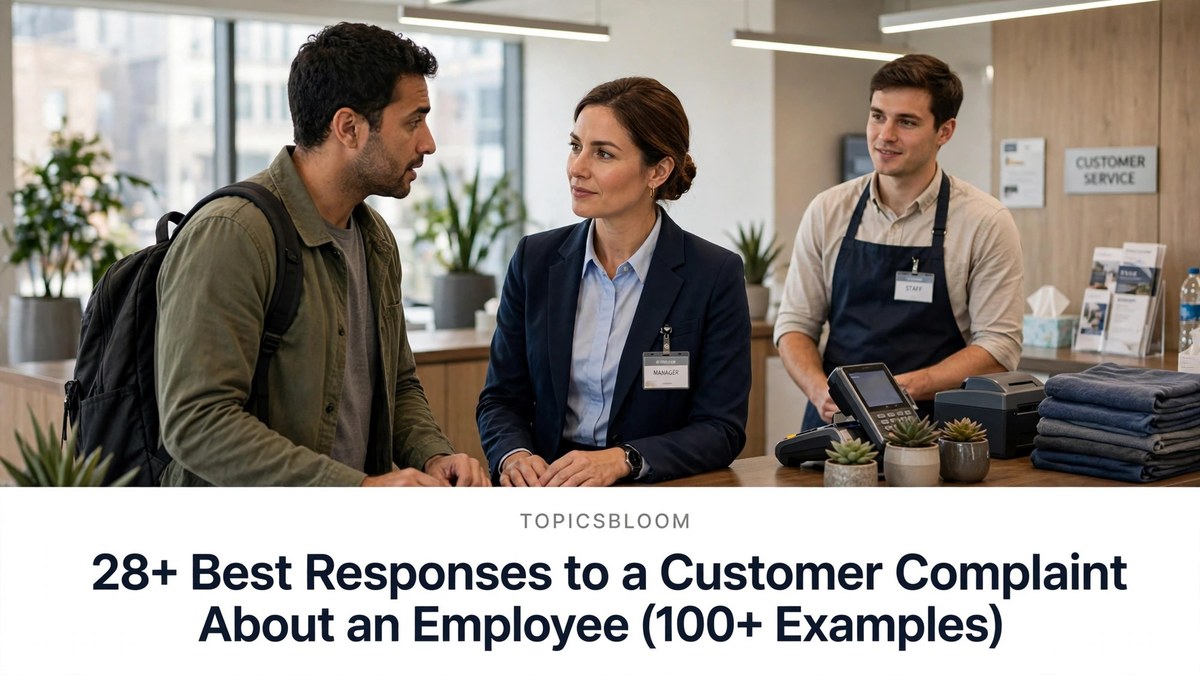
28+ Best Responses to a Customer Complaint About an Employee (100+ Examples)
Quick guide
A customer complaint about an employee puts a manager in a difficult spot. You need to take the customer seriously, protect the employee’s right to a fair hearing, and fix the service problem, all in the same conversation.
Below you will find 24 copy-ready responses to a customer complaint about an employee, sorted by situation: listening and taking it seriously, rude or unprofessional behavior, cases where the facts are unclear, fixes that do not blame anyone, follow up messages after you investigate, and replies for public reviews. If you manage staff who face unhappy customers, our guide to responses to a disgruntled employee will help you handle the other side of the problem too.
Why your response to a customer complaint about an employee matters
A good response to a complaint about an employee separates two jobs: fixing the customer’s problem today, and deciding fairly what happens with the employee. Listen without promising a specific result, write down what happened, speak with the employee privately, and check the facts before you decide anything (how to handle customer complaints about employees). Never promise that the employee will be punished, and never confront them in front of a customer.
- It keeps the customer calm. A customer who feels heard will usually wait for a fair answer instead of demanding an instant punishment.
- It protects your team. Checking the facts first stops a misunderstanding from becoming an unfair warning or a lost employee.
- It builds trust both ways. Customers trust a business that investigates properly, and staff trust a manager who hears their side too.
Best responses to a customer complaint about an employee
Pick the situation that matches yours, then copy the reply that fits your tone. Change the names, dates, and details to fit the real complaint, and keep your voice steady and respectful in every message you send.
1. First replies that listen and take it seriously
Use these in the first minute of the complaint, in person, on the phone, or by email. Let the customer finish, thank them for speaking up, and promise a proper look into what happened. Do not take sides before you know the facts.
#1 “Thank you for bringing this to our attention. I am sorry you had that experience, and I want to understand exactly what happened. Could you tell me when it took place and who was involved, so I can look into it properly?”
#2 “I appreciate you telling me, and I am sorry we let you down. That is not the service we aim to give, and I will look into what happened today. May I take your contact details so I can follow up with you once I have checked the facts?”
#3 “I am sorry to hear that, and thank you for speaking up. I would like to hear the full story from you first, so please take your time. I will speak with the team member involved and get back to you with an update.”
#4 “Thank you for letting me know. I understand this was frustrating, and I want to make sure we handle it fairly. Let me write down what happened, and I will investigate it and come back to you by tomorrow.”
2. Replies for rude or unprofessional behavior
Use these when the customer says an employee was rude, dismissive, or disrespectful. Acknowledge how it felt, apologize for the experience, and say what you will do next. If the employee involved has a history of attendance problems, our responses to an employee calling out guide has wording for that conversation too.
#5 “I am very sorry you were spoken to that way. That is not how we expect our team to treat any customer, and I understand why you are upset. I will speak with the employee involved today and make sure this is addressed properly.”
#6 “Thank you for telling me, and I apologize. Being ignored or dismissed is frustrating, and you deserved polite, helpful service. I will raise this with the team member and with their supervisor, and I will follow up with you directly.”
#7 “I am sorry about the way you were treated at the counter. Our staff should be courteous even on a busy day, and it sounds like we fell short. I have noted your complaint, and I will personally make sure your next visit goes smoothly.”
#8 “I appreciate you bringing this to me, and I am sorry. Rude behavior is not acceptable here, and I take your complaint seriously. I will investigate what happened and speak with the employee privately before I decide on the next step.”
3. Replies when the facts are unclear
Use these when the customer and the employee tell different stories, or when you were not there to see it. Stay neutral, gather the details, and promise a fair check. Never agree that the employee was wrong before you have heard their side.
#9 “Thank you for explaining what happened. I was not there at the time, so I need to check the facts before I can give you a full answer. I will speak with the employee and check our records, and I will contact you once I have the full picture.”
#10 “I understand, and I am sorry this has left you unhappy. Because the accounts differ, I want to look into this carefully and fairly. I will review what we have on record and speak with everyone involved, then I will update you.”
#11 “I appreciate you raising this, and I will take it seriously. I need a little time to gather the details and hear the other side before I decide what to do. I will call you back by the end of tomorrow with an update.”
#12 “Thank you for your patience. I can see this matters to you, and I want to get it right rather than rush to a conclusion. Let me collect the details today, and I will let you know what we found and what we are doing about it.”
4. Replies that offer a fix without blaming anyone
Use these when you need to solve the customer’s problem right now, before the investigation is finished. Offer a practical fix, a redo, or a refund, and keep the employee question separate. A quick fix calms the customer while you handle the staff side properly.
#13 “I am sorry about what happened, and I would like to put it right for you today. Let me redo your order with a senior member of staff, and your next visit is on us. I will also look into the service issue separately.”
#14 “Thank you for telling me. While I investigate what happened, let me fix the immediate problem: I can refund the charge, rebook your appointment, or arrange a replacement. Which of those would help you most right now?”
#15 “I apologize, and I want to make sure you leave happy today. I will personally take care of your request from here, and I will raise the service concern with the team afterwards. Please let me know if there is anything else I can do.”
#16 “I am sorry we disappointed you. Let me offer you a full refund and a fresh appointment with a different team member, so you can see the standard we aim for. I will also follow up on the complaint you raised.”
5. Follow up replies after you investigate
Use these after you have spoken with the employee and checked the facts. Tell the customer what you found in general terms, what you have done, and what will change. Keep the details of any discipline private, since that is an internal matter. For wording on formal next steps, see our responses to a write up at work guide.
#17 “Thank you for your patience. I have looked into your complaint and spoken with the employee involved. We have addressed the issue through our internal process, and I have also reminded the team about the service standard we expect. I am sorry again for your experience.”
#18 “I have completed my review of what happened. The employee has received coaching on how to handle situations like this, and we have changed how we cover the front desk at busy times. I appreciate you bringing it to our attention.”
#19 “Thank you for giving me time to investigate. I found that your account was correct, and we have taken steps to make sure it does not happen again. I would like to invite you back so we can show you the service you should have received.”
#20 “I have looked into this carefully, and I want to be honest with you: the facts do not fully support the complaint, but I am still sorry you left unhappy. We have reviewed the process with the team, and I hope you will give us another chance.”
6. Short replies for reviews and social media
Use these when a complaint about an employee appears as a public review or a social media post. Keep it brief, thank the customer, and move the details to a private message. For longer term performance steps, see our responses to a performance improvement plan guide.
#21 “Thank you for your feedback, and we are sorry about your experience with our team member. That is not the standard we expect, and we have raised it with the team. Please message us directly so we can discuss it further.”
#22 “We are sorry to hear that your interaction with our staff felt unpleasant. We take complaints like this seriously and we are looking into what happened. Please contact us so we can follow up properly.”
#23 “Hi, thank you for letting us know. We are sorry you were treated that way, and we have passed your message to the manager. Could you send us your contact details so we can call you back?”
#24 “Thank you for your honest review. We are sorry the service fell short, and we are reviewing the matter with the team involved. Your feedback helps us improve, and we hope you will visit us again.”
What to avoid when responding to a customer complaint about an employee
| Avoid this | Try this instead |
|---|---|
| Promising the employee will be punished | Say you will investigate fairly and follow your internal process, then do exactly that |
| Confronting the employee in front of the customer | Speak with the employee privately, after you have heard the full complaint |
| Treating the complaint as fact before checking | Write down the account, gather the facts, and hear the employee’s side too |
| Sharing discipline details with the customer | Say the matter has been addressed through your process, and keep the details private |
| Going silent after the first apology | Give a date for your follow up, then contact the customer on that date |
Frequently Asked Questions
How do I respond to a customer complaint about an employee?
Listen, write it down, and investigate before you decide. Fix the customer’s problem first, speak with the employee privately, then follow up with the customer.
Should I tell the customer what happened to the employee?
No, keep discipline private. Say the matter was looked into and addressed through your process, without sharing internal details.
What if the complaint about the employee is not true?
Stay polite and close it properly. Thank the customer, explain what you checked, and offer a fresh visit so they can see the real standard.
Final Thoughts
A customer complaint about an employee is a test of fairness as much as a test of service. Take the customer seriously, fix their problem, investigate the facts, and hear the employee’s side before you decide anything. Do that every time and you will keep your customers, keep your team, and keep the trust of both. For more workplace wording guides, visit TopicsBloom and try the free Smart Reply Generator for a reply tailored to your exact situation.
Leave a Reply