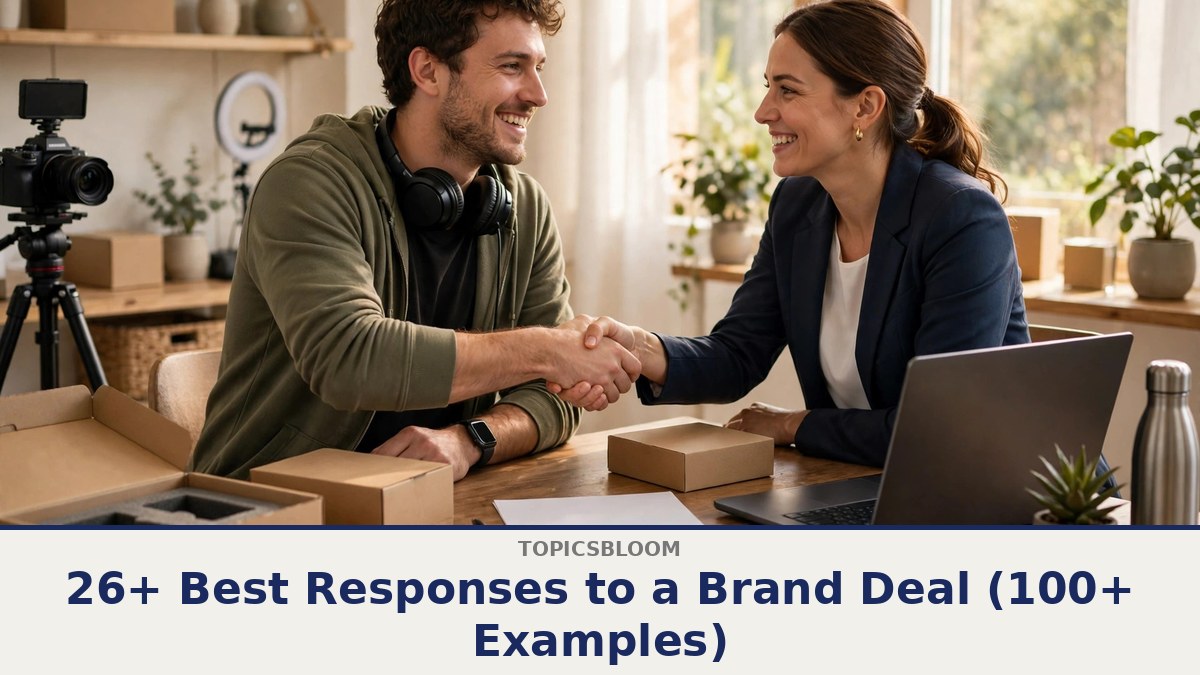
26+ Best Responses to a Brand Deal (100+ Examples)
Quick guide
A brand deal in your inbox feels exciting, and it can also feel risky. The offer may be your first paid collaboration, or one of many, but the reply you send decides whether the deal grows into a fair partnership or turns into free work, missed deadlines, and awkward follow ups.
Below you will find 24 copy-ready responses to a brand deal, sorted by situation: accepting the deal warmly, asking for the full details first, negotiating your rate, declining politely, handling gifted products, and replying fast on social media. If you also handle client work, our guide to responses to a client request will help you keep every message professional.
Why your response to a brand deal matters
A good response to a brand deal shows enthusiasm without giving anything away. You thank the brand, ask for the deliverables, the timeline, the usage rights, and the payment terms before you quote a rate, because nearly half of all brand deals never close, and most fail on missing details rather than on price (what happens after a brand reaches out). Ask first, quote second, and get the agreed terms in writing before you start creating.
- It protects your rate. Asking for the full brief before you quote stops you from accepting a low fee for a large job.
- It shows you are a professional. Brands repeat work with creators who ask clear questions and confirm terms in writing.
- It keeps the door open. A polite decline today often brings a better paid offer from the same brand tomorrow.
Best responses to a brand deal
Pick the situation that matches yours, then copy the reply that fits your tone. Change the names, dates, and amounts to fit your deal, and keep the tone warm and professional in every message you send.
1. Warm replies that accept a brand deal
Use these when the brand, the product, and the pay all look right. Thank them by name, confirm your excitement, and ask for the brief and the contract so you can start work without delay. A warm yes sets a friendly tone for the whole collaboration.
#1 “Hi [Name], thank you so much for reaching out. I love [Brand] and I would be delighted to work together. Please send the campaign brief and the contract, and I will confirm the timeline and deliverables right away.”
#2 “Hello [Name], thank you for thinking of me for this collaboration. I am excited about [product] and happy to accept. Could you share the posting dates, the content format, and the payment schedule so I can plan my week?”
#3 “Hi [Name], I would love to partner with [Brand] on this campaign. The product fits my audience well, and I am confident I can create something they will enjoy. Please send the brief and I will get started.”
#4 “Dear [Name], thank you for the offer. I am pleased to accept, and I look forward to creating content for [Brand]. Please confirm the deliverables and the approval process, and I will send my first draft by [date].”
2. Replies that ask for the full details first
Never quote a rate before you know the work. If the first email is missing the budget, the format, or the usage rights, ask for them now. For proposal wording in general, see our responses to a business proposal sample for a clear structure you can copy.
#5 “Hi [Name], thank you for reaching out. This sounds like a great fit for my audience. Before I share my rates, could you tell me the deliverables, the posting timeline, and whether paid usage rights are included?”
#6 “Hello [Name], I appreciate the offer and I am interested. Could you share the budget range, the platforms you have in mind, and the number of revision rounds? Once I have those details, I can send a tailored quote.”
#7 “Hi [Name], thanks for thinking of me. I would like to try [product] first so I can speak about it honestly. Could you arrange trial access and send the campaign brief in the meantime?”
#8 “Dear [Name], thank you for the message. Before I review this properly, could you confirm the brand name, the product, the content format, and the posting deadline? I want to make sure I can deliver my best work.”
3. Replies that negotiate your rate
Negotiation is normal, and brands expect it. State your rate as a clear proposal, not as a question, and explain briefly what it covers. If the budget is lower, offer a smaller package instead of cutting your price for the same work.
#9 “Hi [Name], thank you for sharing the budget. Based on the scope and the timeline, my rate for this package would be [amount]. That covers [deliverables], two revision rounds, and 30 days of organic usage rights.”
#10 “Hello [Name], I appreciate the offer. The budget is below my usual rate for this kind of work, but I can offer a smaller package with [deliverables] for [amount]. Would that work for your campaign?”
#11 “Hi [Name], thanks for the details. My rate for one video and two social posts is [amount], which includes usage rights for 90 days. If you need a longer usage period, I can adjust the quote to match.”
#12 “Dear [Name], I would love to work with [Brand], and I want to be fair to both sides. My standard rate for this scope is [amount]. If that is above your budget, I am open to discussing a smaller set of deliverables.”
4. Replies that decline a brand deal politely
A polite no protects your reputation and your audience. Thank the brand, give one short reason, and leave the door open for future work. Never ignore the email, and never accept a deal for a product you would not use yourself.
#13 “Hi [Name], thank you so much for reaching out. After looking at the product and my audience, I do not think this is the right fit right now. I appreciate the offer and I hope we can work together on a future campaign.”
#14 “Hello [Name], I am grateful for the offer, but I have to pass on this one. My schedule is full for the next month, and I would not want to rush content for your brand. Please keep me in mind for future collaborations.”
#15 “Hi [Name], thank you for thinking of me. I only promote products I have tried and genuinely like, and this one is not a match for my audience. I wish you every success with the campaign.”
#16 “Dear [Name], I appreciate the invitation, but I will have to decline this time. The timing does not work for me, and I want to be honest rather than accept and deliver late. Thank you for understanding.”
5. Replies for gifted products and free product offers
Gifted products are not the same as paid work. Be clear about what you will and will not do, and ask whether a paid collaboration is possible. If you accept a gift, say so honestly and keep your review truthful.
#17 “Hi [Name], thank you for offering to send [product]. I am happy to try it and share my honest thoughts if I love it. Just so we are clear, a gifted product does not include a guaranteed post. Is a paid collaboration also possible?”
#18 “Hello [Name], I appreciate the gift offer. I would love to try [product] and, if it suits me, I can feature it in a video. Could you confirm the shipping details and whether you would like a review or just feedback?”
#19 “Hi [Name], thanks for reaching out. I am currently only taking paid collaborations, but I am happy to try [product] and give you honest feedback. If you have a budget for a post, I would love to discuss it.”
#20 “Dear [Name], thank you for the kind offer. I would be glad to receive [product] and try it for myself. If it works well for me, I will share it with my audience in my own words.”
6. Short replies for DMs and social media
Brands often reach out first on Instagram or TikTok. Keep the DM short, move the details to email, and never agree to terms in a chat thread. For more short professional wording, see our responses to a collaboration offer and our responses to a quote request guides.
#21 “Hi, thanks for the message. I would love to hear more. Could you email the brief and the budget to [email]? Happy to take it from there.”
#22 “Hello, thank you for reaching out. This sounds interesting. Please send the details by email and I will review them and reply within two days.”
#23 “Hi, I appreciate the offer. I am interested, but I need the deliverables, timeline, and payment terms before I can confirm. My email is [email].”
#24 “Thanks for thinking of me. Please send the campaign details to my business email, and I will get back to you with my rates and availability.”
What to avoid when responding to a brand deal
| Avoid this | Try this instead |
|---|---|
| Accepting the first offer on the spot | Thank the brand, ask for the brief, and confirm the terms before you agree |
| Quoting a rate before you know the scope | Ask for deliverables, timeline, and usage rights first, then quote |
| Promoting a product you have never tried | Ask for trial access and test it before you agree to feature it |
| Agreeing to terms in a DM thread | Move the deal to email and get the agreed terms in writing |
| Ignoring an offer you want to decline | Send a short polite decline and keep the relationship warm |
Frequently Asked Questions
How do I respond to a brand deal email?
Thank the brand, then ask for the details. Confirm the deliverables, timeline, usage rights, and payment terms before you quote a rate. Keep your reply warm, short, and professional.
Should I accept a gifted product instead of payment?
Only if it truly helps you. A gift is not payment, so be clear that it does not guarantee a post. Ask whether a paid collaboration is possible before you agree.
How do I politely decline a brand deal?
Thank them and give one short reason. Say the product or the timing is not the right fit, and add that you hope to work together in future. A polite no keeps the door open.
Final Thoughts
A brand deal is a business conversation, not just a compliment. Thank the brand, ask for the full details, quote your rate with confidence, and get the terms in writing before you create anything. Do that every time and each deal will teach you something useful, whether it ends in a yes, a better counter offer, or a polite no that leads to a stronger partnership later. For more workplace wording guides, visit TopicsBloom and try the free Smart Reply Generator for a reply tailored to your exact situation.
Leave a Reply